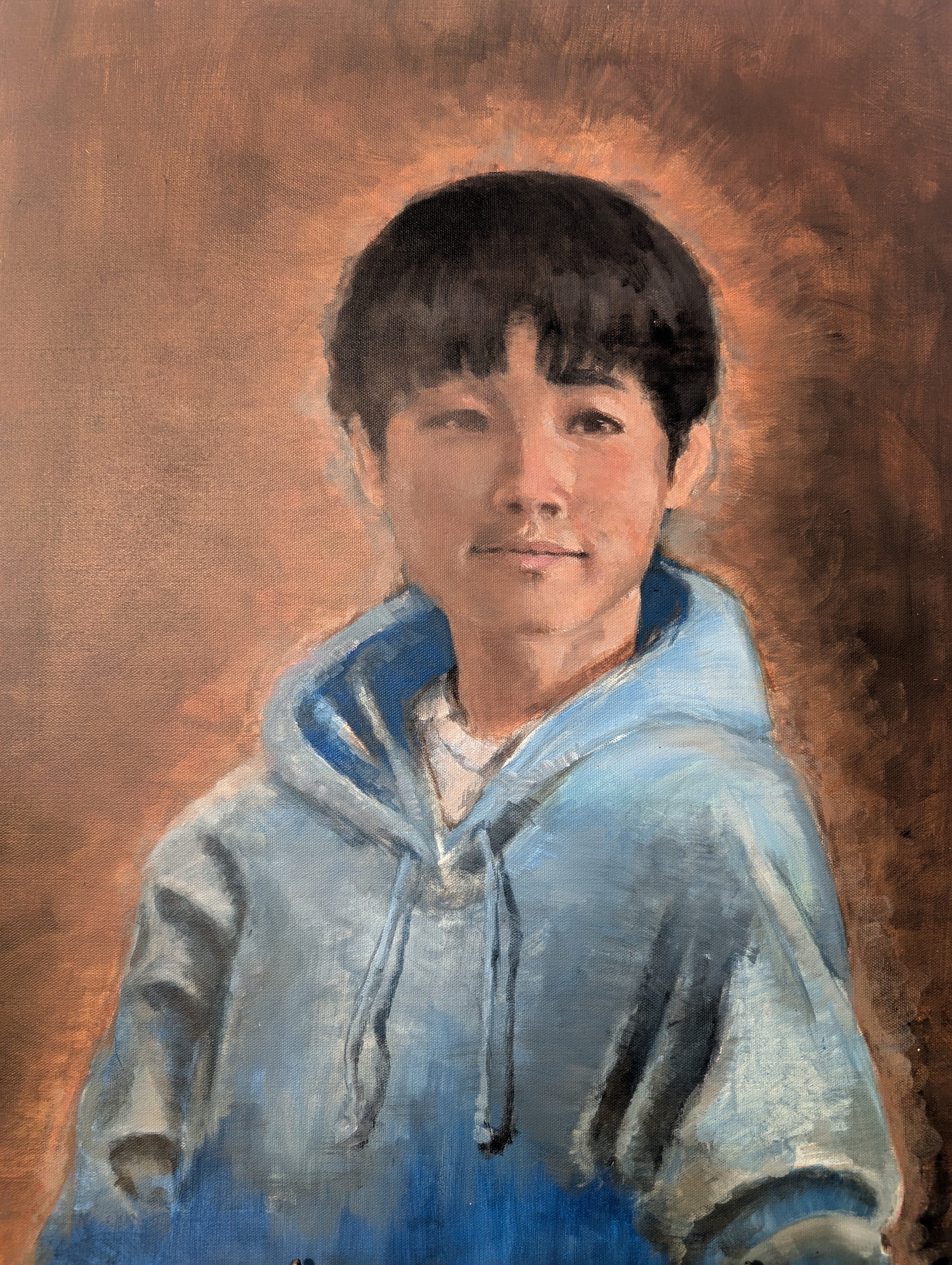
My Despicable Romp through Visual AI
And what I learned from it

I have a stubborn tendency to like things I’m supposed to dislike. For a few years, I wrote a newspaper humor column called “Lowbrow,” which went to bat for “guilty pleasures” like McDonald’s and reality TV.
The running joke of the column was to discuss these things in highbrow language, making it difficult—cognitively dissonant—to write me off as low class. Maybe I was merely a slob who’d missed the memo about all the terrible things, but my very first column addressed this head-on:
Is this an “anti-intellectual” column? No. It is a super-intellectual column. Anyone can see the benefit of a five-mile run or plate of broccoli rabe. This column scoffs at such non-challenges and sets itself a different goal: to find the hidden value in despised things.
I had the quiet, routine life of your standard suburban mother, and I contrived to feel a little bit edgy in my spare time.
I bring this up because recently, in the waning days of summer, I started fooling around with Grok Imagine. It was a new, interesting way to kill ten minutes. After five years of Wordle, I still did it regularly—like the Pope—but no longer took much pleasure in it. The daily puzzle had become a futile exercise in completionism, a cold plunge in an infinite sea of words. Pope Leo still appeared to take an undiminished joy in Wordle. But where he had gone, I could not follow.
So one day, sitting on the couch on an afternoon break between drudgeries, I plugged a few lines into this newfangled thing they called “AI.”
And, within seconds, I was hooked.
Suddenly I, the family’s willing slave — er, servant leader — possessed an even more obsequious slave, one who would do whatever I wanted. Before my eyes, my hastily-typed words turned into images. They were crisp, bright, finely detailed. While my idea of a good time was guessing LEVEL in six tries, AI blinked like a genie and served up the “roller skating octopus” I ordered.
It took my dumb, half-baked ideas seriously. That was its job.
“Cancel my meetings!” I said to the empty house, where balls of dog hair and dirty dishes took note.
I had a new toy—I was living in the future— and I was going to be in charge, for a change.
The first thing I gleaned from AI was the poverty of my own visual imagination.
I’ve always been a word person, and I pride myself on not using clichés. Not only in writing, but in spoken language, I like to express myself in original ways whenever possible. Once in a while, I’ll get in a zinger around the house—a line I doubt that anyone has used before—and feel a frisson of pride, like when I told my teenaged daughter the other day: “Enjoy your brownie and your movie about an aquatic lesbian.”
Coming up with new lines was easy! But when it came to images, I was a dud.
“Hurr durr Disney . . . hurr durr Wes Anderson . . . gothic . . . er, cartoon . . .”
AI itself recycles styles that have already been done, drawing on a vast library of artists’ original work. It can’t make anything truly new, just recombine elements pioneered by others.
But I was not much better: a primitive bot, stuffed with pop culture. My first visual ideas, such as they were, were hopelessly cliché.
I will not share here the images of a brown-haired mermaid talking to a crab, a Hindu goddess holding a smartphone, spatula, etc., in her many arms, or any of the very boring things I summoned that first day.
But I soon realized I needed to try harder, or it would be the classic GIGO (garbage-in-garbage-out) situation.
AI was, in fact, only as clever as I was.
Second, I learned that our fantasies tell us things about ourselves.
On his X account, Elon Musk often shares images of impossibly beautiful women in fantastical costumes: advertisements for the wish-fulfilling powers of Grok Imagine.
For those who like that sort of thing, that is the sort of thing they like. But, as I learned, we all have fantasies—not merely carnal, but emotional. Now that they can be brought to life, arrayed before us like a waking dream, what do we do with this new knowledge? That is an interesting question.
The next time I fiddled with AI, I was waiting for a train. Raised in a rural California college town, my children are now 18 and 16 years old. In one month, my eldest will start classes at the local UC, shunning us from the fortress of his dorm as he adjusts to college life on his own terms. My daughter, also, will be busy with AP classes, an after-school job, and friends.
Before this all kicked in, I sent them both to Berkeley on the train. They were now old enough to stay in a hotel and spend two days mooching around, visiting coffee shops and bookstores. They didn’t need me to join in, only my checking account info on Uber and Google Pay.
Now they were coming back after 36 hours. Hanging around the train station at dusk, I idly plugged a few lines into Grok, describing the first images that came to mind.

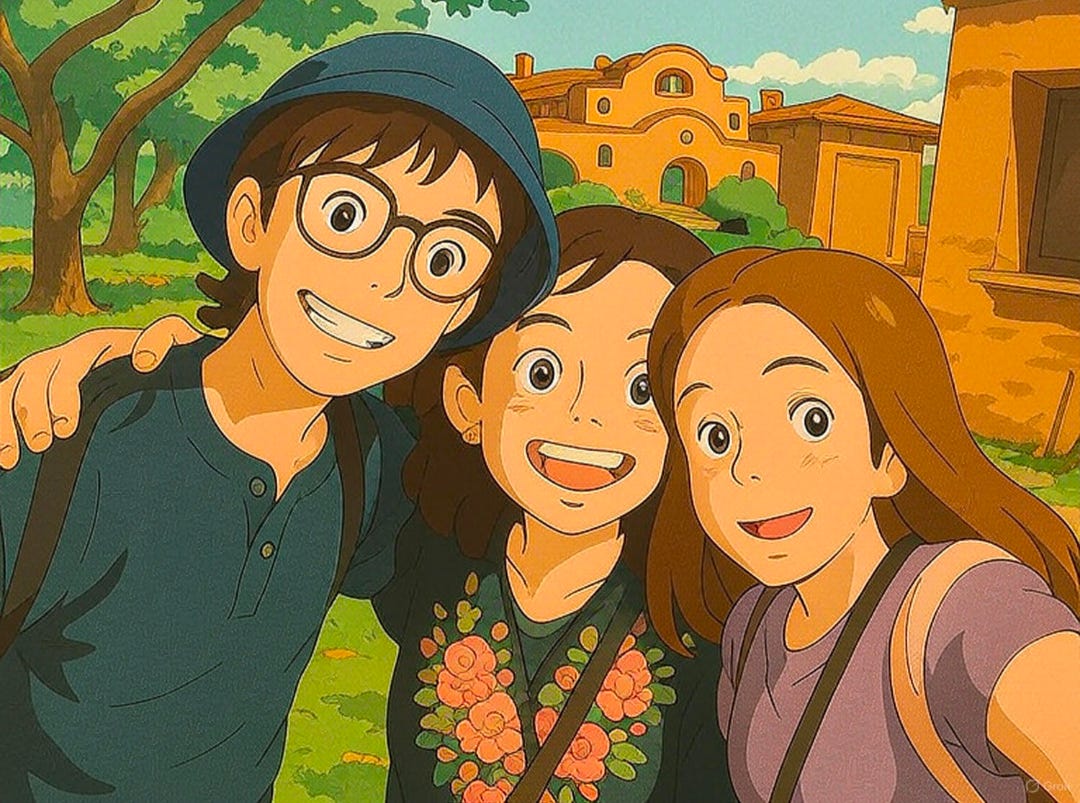
Hansel and Gretel, back safely from the candy house! Skipping towards a joyful reunion with their loving mother:

My actual kids were two gangly teens in hoodies, teens who would soon emerge and—smirking ironically—give me brief side-hugs.
And I was not a matronly homemaker in a floral cardigan, but a multi-tasking office worker who would soon offer my teenagers their choice of takeout food or pizza.
And yet, how lovely it all was! Bathed in an otherworldly golden light, these images conveyed something about the emotional truth of the moment.
My kids would always be my kids—forever beautiful and young, even when they became legal adults and stood taller than me.
They really were happy to see me—to return safely after an adventure—their mother faithfully waiting for them when they stepped off the train.
And I really was that aging homemaker—sans vanity, sans fashion, sans a paying job—because my main job was, and for two decades had been, raising children.
In some ways, I felt old and wise, and I viewed them as eight and six. The AI images were emotionally resonant, truth-telling on some metaphorical level.
But mostly, the chasm between reality and AI soap bubbles was instructive. My erstwhile kids were almost grown. Holding onto their childhoods was a fantasy.
And, in the coming years, I probably needed to get a life.
(Also, my football-obsessed daughter was not going to be the starting quarterback at Texas A&M, even though I could create a lookalike QB in five seconds. Oh well.)

Third, what was AI good for? Jokes.
It was so obvious. Grok was a joke machine.
I grew up poring over New Yorker cartoons, which always interested me more than the stories. It was incredible how just a few words, paired with a sketch, could create a sophisticated joke that drew on multiple shared understandings.
During the 2020 lockdown, I became conversant with memes. Once a fringe phenomenon of Internet culture, the catchy “visual joke” format became a staple of work-from-home life. I discovered that I loved memes—accurately described by Musk as “the most information-dense form of communication”—and wrote an essay about them for a national magazine. As I said then,
They’re free to all and have a universal feel. In our celebrity-obsessed culture, meme-makers ply their craft in anonymity: Everything that made me laugh today was conceived and executed by some faceless nerd, playing a dangerous game with the law of copyright.
Now, AI’s shown up on the scene, ten times more powerful and flagrantly dismissive of the law of copyright. But it may be funnier, too. People with no technical skill or access to expensive equipment can now create any picture they can imagine, mashing up elements and references galore.
Visual imagery is powerful and democratic; there’s a reason medieval churches are filled with pictures, not words. Whatever havoc it may wreak, AI seems like an engine of jokes “gettable” by a wide swath of the population: provocative, uncensored humor anyone, anywhere can put out in the world.
Goodbye, New Yorker; hello, meme-on-cocaine.
In my own small way, I experimented with using AI to amuse.
After successfully squiring his sister around Berkeley, my son decamped to San Francisco for five days to explore the city while staying at a relative’s apartment. As his mother, this put me in a delicate position. I wanted to be sure he was not being robbed, sex-trafficked, or killed, but I didn’t want to nag long-distance while he flâneured around, ignoring my texts.
All I wanted to know, I told him, was that he was “in for the night.” On the first two days, he sent me texts reporting “IFTN” at times like 11:00 a.m., times he was obviously not “in for the night.”
Being thus trolled, I started sending AI pictures on the theme of “in for the night,” hoping that they would merit a response. Our first exchange was an extended riff that involved (don’t ask) the Russian novelist Fyodor Dostoevsky “killing a lion.”
When dealing with a teenage boy, you have to come down to their level. Thus, I sent the following image, selected from several hilarious options:

Over the next few days, I noodled around with the theme “in for the night,” texting pictures to him at random intervals.
“In for the Night, 1”
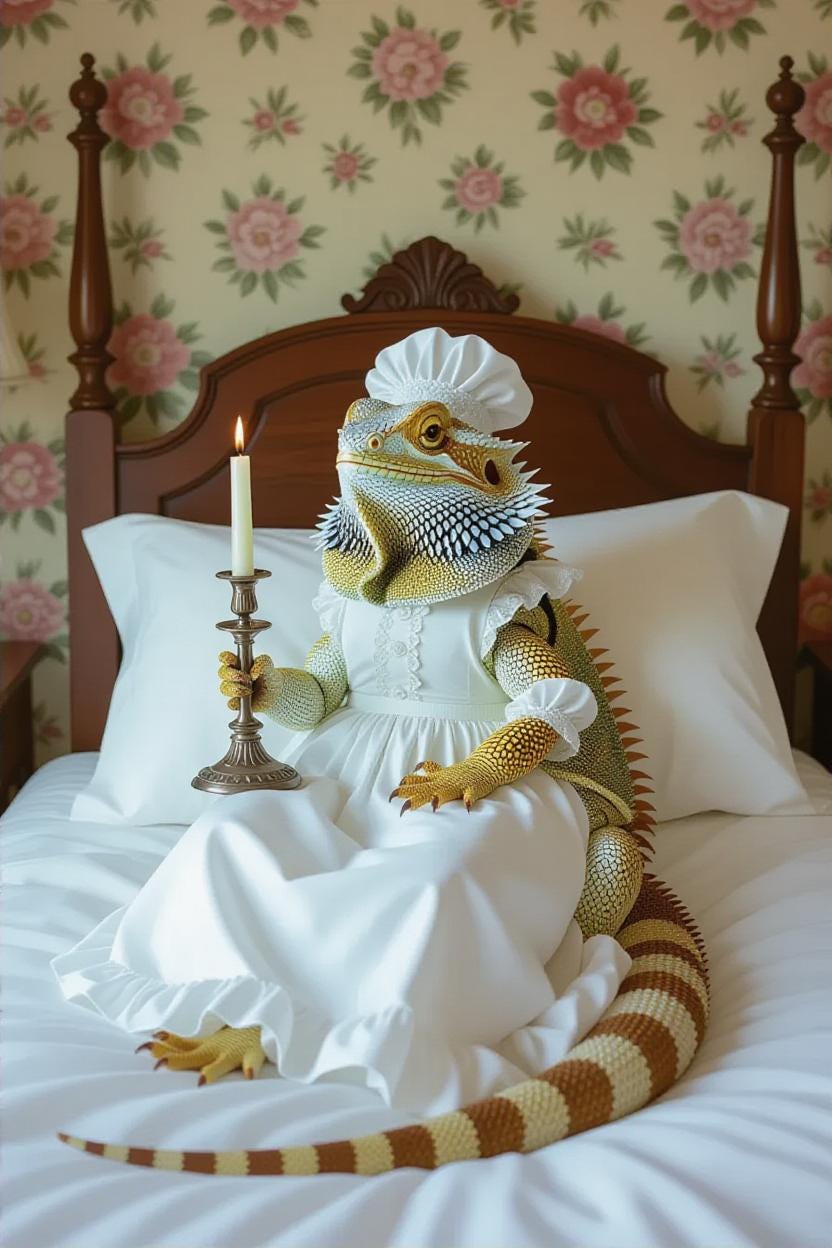
“In for the Night, 2”
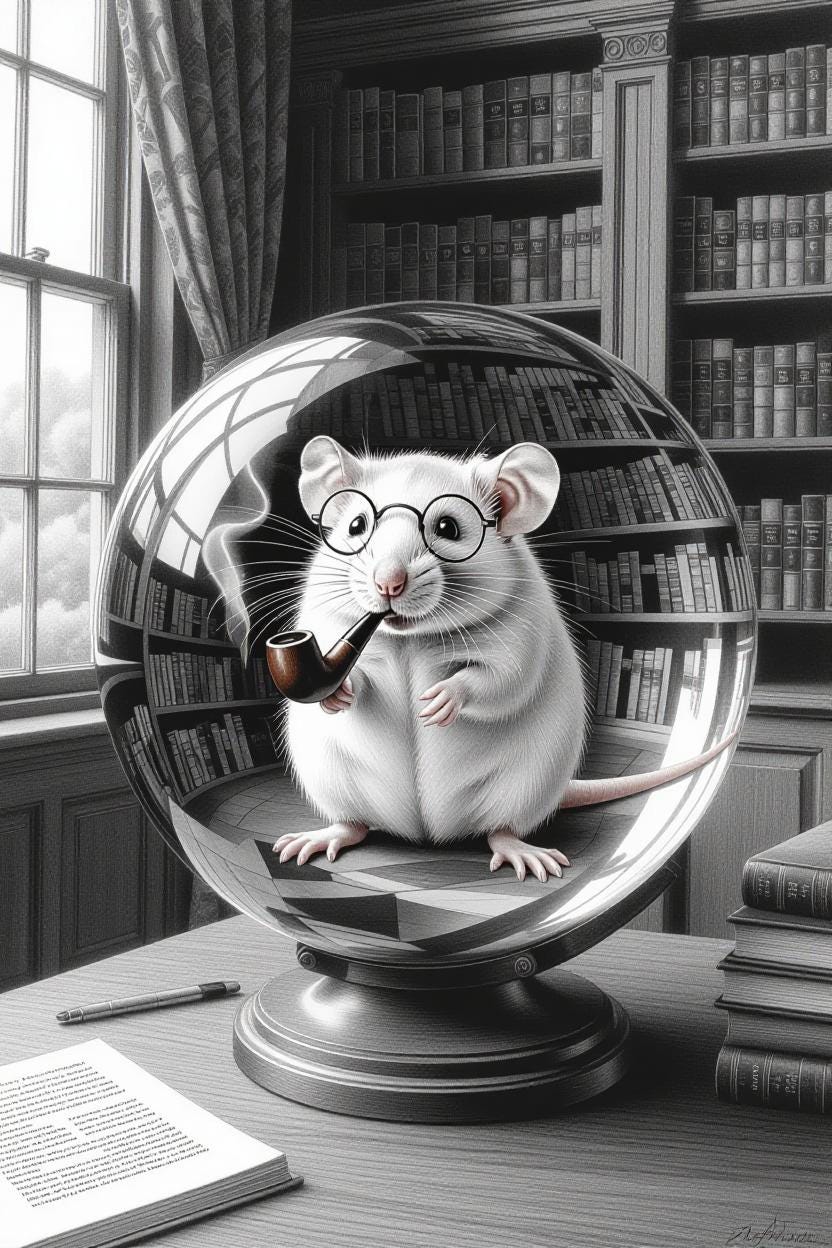
“In for the Night, 3”:
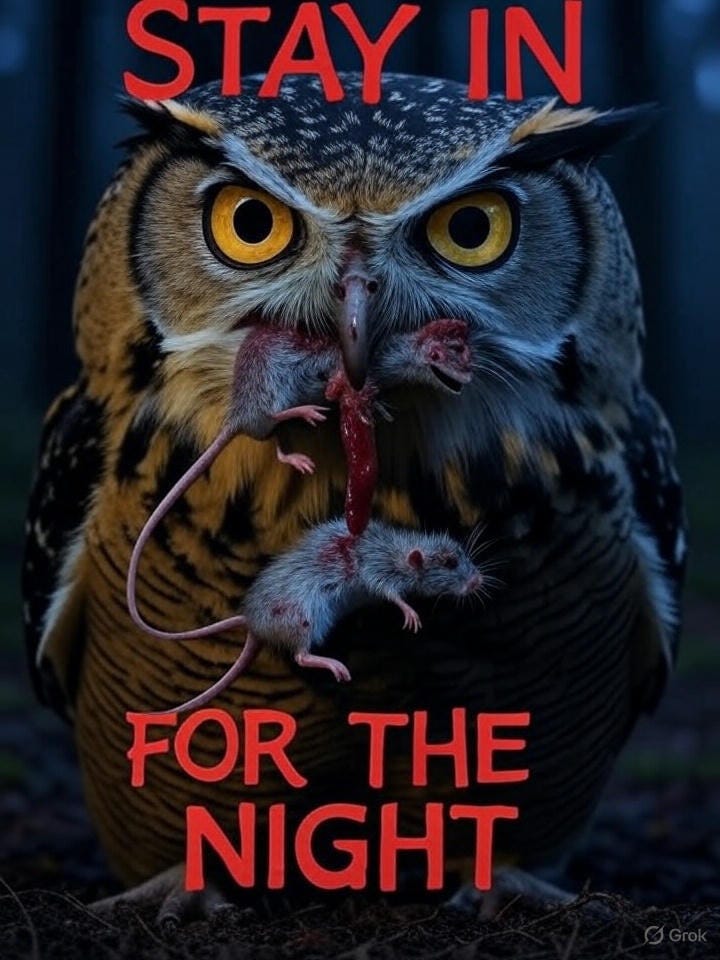
I was amazed I could create these images in seconds. They weren’t perfect, but they were dashed off in my throwaway spare time. Imagine if someone who knew what they were doing took the wheel!
“Learning to prompt AI for best results is going to be the #1 skill of the future,” I typed excitedly into a group chat.
Nobody cared about my thoughts on AI, but I felt I was onto something. This new technology was world-transforming! My kids could throw away their coding books and simply learn to prompt. My daughter, who had no problem expressing her exact specifications, seemed especially promising in this regard.
Fourth, while AI was fun, it was no match for real, human art.
What was my son doing all that time in the city?
For much of it, he was painting in Washington Square Park, in the shadow of the historically Italian Catholic church of Saints Peter and Paul. He hauled around a large canvas and, lacking a portable easel, set it up on the grass, propped on a backpack filled with tubes of paint.
He painted at Coit Tower at 7 a.m. while a woman stood uncomfortably close, smoking, till he had to leave.
He painted while dogs frolicked nearby, while passing strangers asked him questions, while some man informed him he had a “baby face.”
He was on his own time for days, doing exactly as he pleased.
In his 1999 Letter to Artists, Pope John Paul II wrote:
The one who creates bestows being itself, he brings something out of nothing—ex nihilo sui et subiecti, as the Latin puts it—and this, in the strict sense, is a mode of operation which belongs to the Almighty alone.
. . .
Through his “artistic creativity” man appears more than ever “in the image of God”, and he accomplishes this task above all in shaping the wondrous “material” of his own humanity and then exercising creative dominion over the universe which surrounds him.
. . .
Every genuine artistic intuition . . . springs from the depths of the human soul, where the desire to give meaning to one's own life is joined by the fleeting vision of beauty and of the mysterious unity of things.
After I sent my silly owl picture, my son didn’t respond. Later that day, he texted me a simple image:
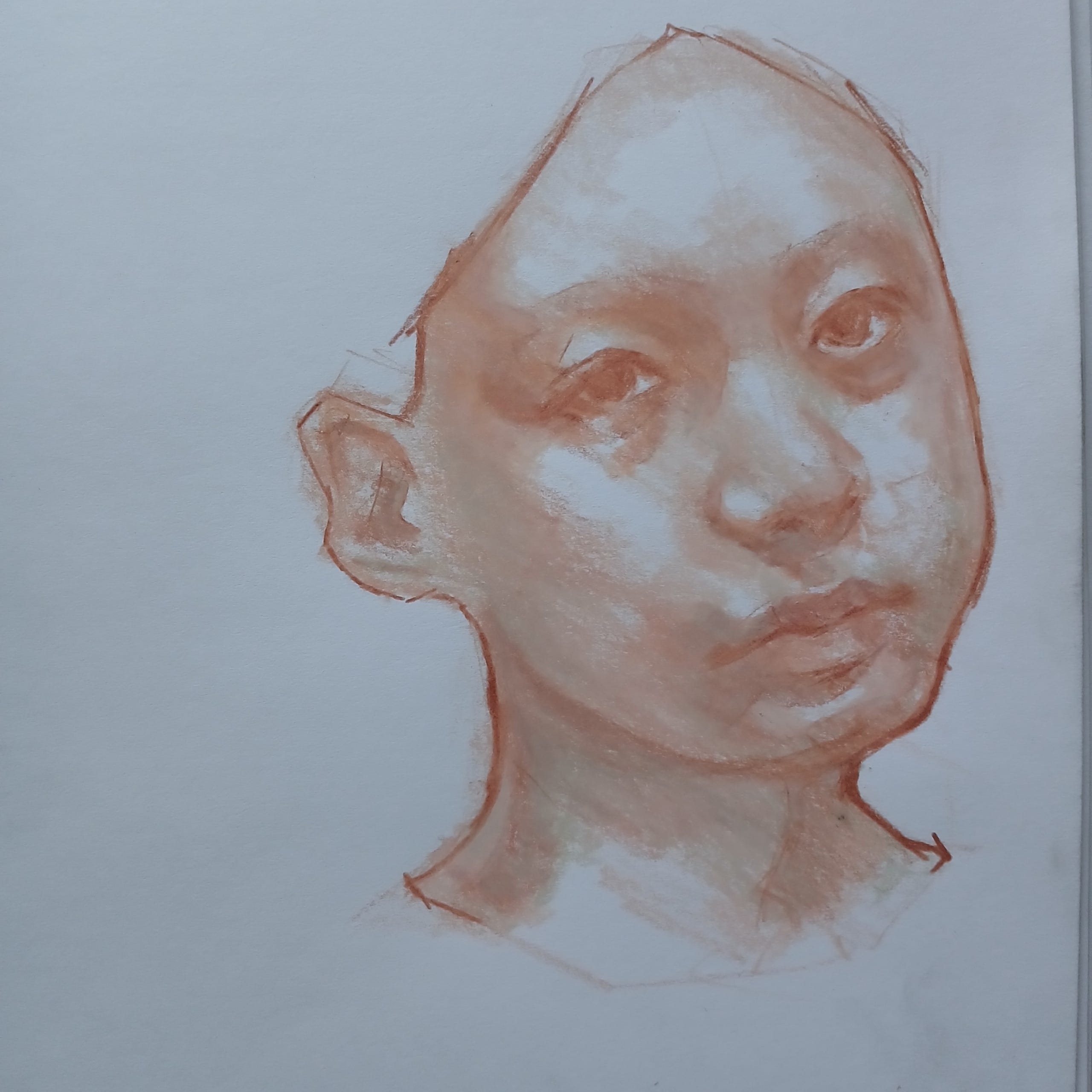
When I saw it, any desire to make AI art evaporated. It was the gentlest of rebukes, not even meant as such, but I received the message.
My son was a real artist—and so, in my own way, was I. No algorithm, no technological new toy, could write my novel. It couldn’t even write one page. It could probably “sound” like me, but it could not create ex nihilo sui et subiecti. That was a beautifully human gift, from God to man alone.
The other day, my son arrived home on the train with a new painting. We all spent the night joking around, in our usual mode.
The next day, it was back to work. I have a new novel to finish. My son is seldom without his sketchpad. My daughter hauls around a vintage Leica camera. We all have busy lives, filled with all the material we need.
As creators, we did just fine without AI, and we will do fine with it. It cannot possibly step on our human toes.
But if you need an octopus on roller skates, just let me know.